Too Little or Too Much: How Selenium Walks a Razor's Edge in American Health

Photo: selenium supplement capsules mineral laboratory scientific health, via assets.apidog.com
A Mineral That Demands Precision
Most nutritional conversations center on getting enough of something. Eat more leafy greens. Take your vitamin D. Increase your protein. Selenium breaks that mold entirely. It is one of the few essential trace minerals where the gap between therapeutic and harmful is narrow enough that clinical researchers speak not in terms of maximums and minimums but of a "safe window"—and that window is not particularly wide.
For the average American, that complexity rarely surfaces in a routine checkup. Yet selenium's influence reaches into thyroid regulation, antioxidant enzyme production, immune signaling, and even certain aspects of reproductive health. Getting the balance wrong in either direction carries real consequences—and the structure of modern American life makes both errors surprisingly easy to make.
The Geography of Deficiency
Selenium enters the human food supply primarily through soil. Plants absorb it, animals graze on those plants, and people consume both. The problem is that American soil is not uniformly selenium-rich. The Pacific Northwest, parts of the Great Lakes region, and significant stretches of the Southeast are characterized by selenium-poor soil. Residents who source the majority of their calories locally—through small farms, community-supported agriculture, or home gardens—may be drawing from a nutrient-depleted base without realizing it.
This is not a theoretical concern. Studies measuring selenium status in populations across different states have documented meaningful regional variation. While the commercial food supply helps buffer some of this disparity by blending agricultural outputs from across the country, individuals with restricted diets, limited food diversity, or those living in selenium-poor zones remain at measurable risk.
Vegans and vegetarians deserve particular mention here. Animal-based foods, especially organ meats, seafood, and eggs, tend to deliver selenium in highly bioavailable forms. Plant-based diets, unless carefully constructed around selenium-rich options like Brazil nuts or fortified foods, can leave this nutrient chronically underrepresented.
What Deficiency Actually Does to the Body
Selenium is a structural component of selenoproteins—a class of proteins that perform some of the body's most important oxidative housekeeping. Among these, glutathione peroxidase enzymes neutralize reactive oxygen species that would otherwise damage cell membranes and DNA. Thioredoxin reductase, another selenoprotein, supports cellular redox balance and plays a role in DNA repair. When selenium runs low, both systems become less efficient.
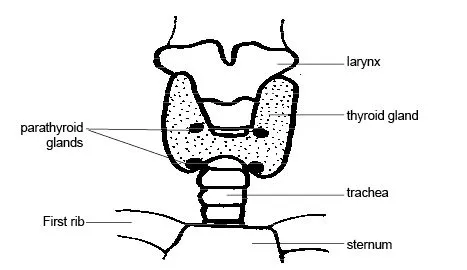
The thyroid connection is especially significant for American health. The thyroid gland contains a higher concentration of selenium per gram of tissue than virtually any other organ. Selenoproteins are required for the conversion of thyroxine (T4) into the more metabolically active triiodothyronine (T3). Selenium deficiency does not simply reduce thyroid output—it disrupts the entire conversion cascade, potentially producing symptoms that mimic hypothyroidism even when standard thyroid panels appear unremarkable. Fatigue, cold sensitivity, weight resistance, and cognitive sluggishness may all have selenium insufficiency as a contributing factor, yet this is rarely among the first variables investigated.
Immune function also suffers measurably. Selenium-deficient individuals show impaired T-cell proliferation, reduced natural killer cell activity, and a diminished antibody response to vaccination. Some research suggests that selenium insufficiency may accelerate the mutation rate of certain viruses within the host, a finding with significant implications for pandemic resilience at the population level.
The Toxicity Problem: When More Becomes Harmful
Here is where selenium's story diverges sharply from that of most other nutrients. While deficiency is a genuine concern for specific populations, selenium toxicity—known clinically as selenosis—is also a real and documented phenomenon in the United States.
Environmental exposure plays a role in certain agricultural and industrial regions where selenium-rich rock formations or legacy mining activity has elevated groundwater and soil concentrations. But the more common driver of toxicity today is supplement overuse.
The Recommended Dietary Allowance for selenium in adults sits at 55 micrograms per day. The tolerable upper intake level established by the National Institutes of Health is 400 micrograms per day. That figure sounds generous until one accounts for the cumulative nature of modern supplementation: a multivitamin may contribute 55 to 70 micrograms, a standalone selenium supplement another 200 micrograms, and a handful of Brazil nuts—often promoted in wellness circles as a natural selenium source—can deliver 70 to 90 micrograms per nut. A seemingly health-conscious daily routine can quietly push total intake past the safe threshold.
Chronic selenosis produces a recognizable cluster of symptoms: brittle nails, hair loss, a garlic-like odor on the breath, gastrointestinal distress, and in more severe cases, neurological symptoms including numbness and motor difficulties. Because these manifestations overlap with other conditions, the selenium connection is frequently missed.
Who Should Pay Closer Attention
Certain populations occupy higher-risk positions on both ends of the spectrum. Those living in selenium-poor regions who consume primarily local produce and little animal protein face a genuine deficiency risk. Individuals with Crohn's disease, celiac disease, or other malabsorptive conditions may absorb selenium poorly regardless of dietary intake. Pregnant and lactating women have elevated requirements that standard diets may not fully meet.
On the toxicity side, individuals who supplement aggressively—particularly those who combine multiple products without reviewing cumulative micronutrient loads—are most vulnerable. The wellness supplement market has made it easier than ever to inadvertently layer selenium intake from multiple sources.
Testing and Supplementation: A Measured Approach
Blood selenium testing is available and can provide useful directional information, though serum levels do not perfectly reflect tissue stores. Whole blood or red blood cell selenium measurements offer a somewhat more complete picture. If you are experiencing symptoms consistent with thyroid dysfunction, immune suppression, or unexplained hair and nail changes, requesting a selenium panel alongside standard labs is a reasonable step.
For those who are confirmed deficient or at high risk of deficiency, selenomethionine—the organic form found naturally in food—is generally well absorbed and is the form most commonly used in clinical studies demonstrating benefit. Sodium selenite, an inorganic form, is also effective but may have slightly different bioavailability characteristics.
Dosing should be individualized. A clinician familiar with your dietary pattern, geographic context, and existing supplement regimen is best positioned to recommend an appropriate target. Self-supplementing at high doses without baseline testing is one of the more avoidable nutritional mistakes an otherwise health-conscious individual can make.
The Broader Lesson
Selenium is in many ways a microcosm of what makes modern nutrition genuinely complex. It is not simply about eating more or less of a given nutrient. It is about understanding the variables that determine your individual status—soil composition, dietary diversity, absorption capacity, and the cumulative burden of your supplement stack—and calibrating accordingly.
At Dr. Zoh Wellness, the principle that guides every product recommendation and every editorial piece is the same: science-backed precision over generalized advice. Selenium exemplifies why that distinction matters. The right amount protects. The wrong amount—in either direction—harms. Knowing which side of that line you stand on is not a luxury. It is foundational.