Iodine in the Age of Sea Salt and Processed Food: The Thyroid Deficiency No One Is Talking About
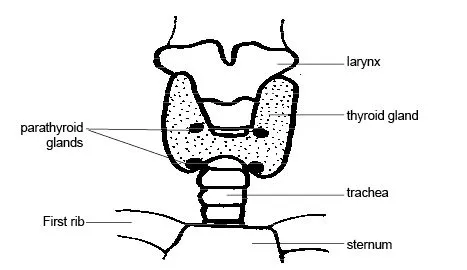
Photo: The original uploader was Sunshineconnelly at English Wikibooks., CC BY 3.0, via Wikimedia Commons
The Problem Hidden in Plain Sight
In 1924, the United States began adding iodine to table salt as a direct response to a widespread epidemic of goiter—a visible swelling of the thyroid gland caused by chronic iodine deficiency. The intervention was considered one of the great public health victories of the twentieth century. Rates of thyroid enlargement plummeted. The problem, it seemed, had been solved.
Nearly a century later, that victory is quietly unraveling.
Survey data from the National Health and Nutrition Examination Survey (NHANES) has shown a steady decline in urinary iodine concentrations among Americans over the past several decades—a reliable proxy for iodine status across populations. Pregnant women, in particular, have been flagged as a group with persistently suboptimal levels. Yet the public conversation around iodine has remained almost nonexistent, eclipsed by more fashionable nutrient discussions involving vitamin D, magnesium, and omega-3 fatty acids.
The iodine gap is real. And it is being driven by a set of modern dietary behaviors that most people would never think to question.
Why Iodized Salt Is No Longer Enough
The logic behind salt iodization was sound for its era. If nearly everyone uses table salt, fortifying it ensures broad population coverage at minimal cost. The flaw in this reasoning becomes apparent when you examine how Americans actually eat today.
Approximately 70 to 75 percent of the sodium in the average American diet comes not from the salt shaker but from processed, packaged, and restaurant-prepared foods. This is a critical distinction: food manufacturers are not required to use iodized salt in their products, and most do not. Bread, canned soups, deli meats, fast food, frozen meals—these items contribute enormous amounts of sodium to the diet while delivering virtually no iodine.
At the same time, a cultural shift has moved health-conscious consumers away from standard iodized table salt toward alternatives marketed as more natural or flavorful: Himalayan pink salt, Celtic sea salt, kosher salt, fleur de sel. These products carry genuine culinary appeal, but they contain negligible amounts of iodine compared to their iodized counterparts. A person who seasons their food with sea salt and eats primarily whole or restaurant-prepared foods may be consuming very little iodine—despite a sodium intake that is perfectly normal or even elevated.
The result is a nutritional paradox: a diet high in salt but low in iodine.
What Iodine Actually Does in the Body
Iodine is not a trace mineral in the sense that it performs a minor or peripheral role. It is structurally indispensable. The thyroid gland cannot synthesize its hormones—thyroxine (T4) and triiodothyronine (T3)—without it. These hormones govern a remarkable range of physiological processes: basal metabolic rate, body temperature regulation, heart rate, digestive motility, skin and hair maintenance, and the development of the fetal brain during pregnancy.
When iodine intake is consistently insufficient, the thyroid gland compensates by enlarging in an attempt to capture more of the mineral from circulation. Over time, this can progress to clinical hypothyroidism, characterized by fatigue, weight gain, cold intolerance, constipation, depression, and cognitive slowing. Subclinical deficiency—levels that fall below optimal without meeting the clinical threshold for disease—can produce subtler but still meaningful effects on energy, mood, and mental clarity.
The body has limited capacity to store iodine. Unlike fat-soluble vitamins that accumulate in tissue over months, iodine reserves in the thyroid gland can be depleted within weeks of inadequate intake. This makes consistent dietary exposure particularly important—and consistent gaps particularly consequential.
Pregnancy, Cognitive Development, and the Stakes of Getting It Wrong
No population faces higher iodine stakes than pregnant and breastfeeding women. Iodine is essential for fetal neurological development from the earliest weeks of gestation, well before many women know they are pregnant. Severe maternal deficiency is a known cause of cretinism—a condition involving profound intellectual disability and developmental delay. But even moderate deficiency during pregnancy has been associated in research literature with measurable reductions in childhood IQ and language development.
The American Thyroid Association recommends that pregnant and breastfeeding women consume 150 micrograms of supplemental iodine daily, in addition to dietary sources, yet surveys consistently show that fewer than half of prenatal vitamins sold in the United States contain iodine. Many women who believe their prenatal supplement has them covered may be operating under a false assumption.
Individual Absorption: Why the RDA May Not Tell the Full Story
The Recommended Dietary Allowance for iodine is 150 micrograms per day for most adults, rising to 220 micrograms during pregnancy and 290 micrograms during lactation. These figures represent population-level estimates, not individualized targets.
Several factors can impair iodine absorption or increase the body's iodine requirements beyond what the standard RDA anticipates. Goitrogens—compounds found in cruciferous vegetables such as raw kale, broccoli, cauliflower, and Brussels sprouts—can interfere with iodine uptake by the thyroid when consumed in large quantities. Soy isoflavones have demonstrated similar effects in some research contexts. Fluoride and bromide, both of which compete with iodine for cellular uptake via the same transport mechanism, are present in municipal drinking water and many baked goods, respectively.
For individuals with any of these exposure patterns, the effective iodine requirement may be meaningfully higher than the published RDA suggests.
Rethinking Supplementation as a Targeted Strategy
Given the complexity of modern iodine status—shaped by processed food consumption, salt preferences, individual absorption variability, and life stage—a blanket recommendation to simply use more iodized salt is insufficient. It also fails to account for the legitimate cardiovascular reasons many Americans are advised to moderate sodium intake overall.
Targeted supplementation offers a more precise approach. Iodine is available in several forms, including potassium iodide, sodium iodide, and molecular iodine, each with different absorption characteristics and tissue distribution profiles. Seaweed-derived sources such as kelp provide naturally occurring iodine but carry significant variability in concentration, making standardized supplementation more predictable for those with established deficiency concerns.
As with any micronutrient intervention, the goal is adequacy rather than excess. Very high iodine intake carries its own risks, particularly for individuals with autoimmune thyroid conditions such as Hashimoto's thyroiditis, where iodine loading may exacerbate immune activity. This is precisely why supplementation decisions benefit from clinical context—ideally informed by baseline thyroid function testing and dietary assessment.
A Quiet Deficiency Deserving a Louder Conversation
The story of iodine in America is one of a public health solution that was never designed for the dietary landscape we now inhabit. The infrastructure of iodized salt cannot protect a population that gets the majority of its sodium from processed foods made without it, seasons fresh food with artisan salts that contain none of it, and follows dietary patterns that may actively impair its absorption.
Restoring adequate iodine status is not a complicated undertaking, but it does require awareness—of food choices, of supplement labels, and of the individual factors that shape how any given person absorbs and utilizes this fundamental mineral. At Dr. Zoh Wellness, the approach begins with understanding the science before reaching for a solution, because informed decisions are the foundation of lasting health.