Why Your Supplements Stopped Working After 40: The Estrogen-Nutrient Connection Most Protocols Miss

It is a pattern encountered with striking regularity in functional health settings across the United States: a woman in her early-to-mid forties, who has maintained a consistent and thoughtfully assembled supplement regimen for years, begins to notice that it no longer seems to be delivering the same results. The magnesium that used to support her sleep now barely registers. The B-complex that once sustained her energy through demanding workdays has lost its edge. The vitamin D she diligently takes each morning is not moving her serum levels.
She is often told that she needs to try harder, eat better, or simply accept that aging has changed her body's response. What she is rarely told is that there is a specific, well-documented physiological mechanism driving this shift—and that it is addressable with a more precise approach to supplementation.
Estrogen's Role in Nutrient Metabolism
Estrogen is not exclusively a reproductive hormone. Its receptors are distributed throughout the human body, including in the liver, the intestinal epithelium, the kidneys, and the brain. In each of these locations, estrogen exerts regulatory influence over processes that directly govern how nutrients are absorbed, transported, and utilized at the cellular level.
During the perimenopause transition—which in American women typically begins between the ages of 40 and 45, often a full decade before the final menstrual period—estrogen levels do not decline in a smooth, predictable arc. They fluctuate erratically, sometimes surging above premenopausal norms before dropping sharply. This volatility creates a moving target for any supplementation strategy calibrated to a stable hormonal environment.
As estrogen availability decreases on net, several nutrient-related systems are simultaneously compromised.
The Liver Detoxification Shift
The liver's phase I and phase II detoxification pathways—responsible for processing hormones, environmental toxins, medications, and the metabolic byproducts of supplement compounds themselves—are meaningfully influenced by estrogen status. Estrogen supports the activity of specific cytochrome P450 enzymes involved in phase I metabolism, and its decline can slow the processing of compounds that depend on those pathways.
For supplement users, this has a practical consequence that is rarely discussed: the metabolic intermediates produced during supplement processing may linger longer in the body, potentially shifting the balance between beneficial and less favorable metabolite profiles. Fat-soluble vitamins that are converted in the liver—vitamin D being the most clinically relevant—may experience altered hydroxylation efficiency, contributing to the blunted serum response that many perimenopausal women observe despite consistent supplementation.
Additionally, estrogen supports glutathione synthesis, the body's primary endogenous antioxidant compound and a critical participant in phase II conjugation reactions. Declining glutathione capacity during perimenopause increases oxidative burden at precisely the time when many women are attempting to support cellular health through antioxidant supplementation—a case of increasing demand meeting decreasing endogenous supply.
Gut Absorption and the Estrogen Connection
Estrogen receptors in the intestinal lining play a regulatory role in the tight junctions that govern intestinal permeability and in the transport proteins responsible for absorbing key micronutrients. As estrogen declines, intestinal permeability may increase—a shift associated with low-grade systemic inflammation and altered absorption efficiency for minerals including magnesium, calcium, and iron.
The clinical implication is that a supplement dose adequate for a woman at 35 may be insufficient to achieve the same absorbed quantity at 47, not because the supplement has changed, but because the intestinal infrastructure processing it has been altered by hormonal transition. This mechanism partially explains why perimenopausal women frequently require upward dose adjustments in magnesium and calcium to maintain the same functional and serum outcomes they previously achieved at lower amounts.
Further complicating matters, the gut microbiome—which participates in the metabolism of estrogen through a subset of bacteria collectively termed the estrobolome—is itself disrupted by declining estrogen. The resulting dysbiosis can impair the enterohepatic recirculation of estrogen metabolites and reduce the microbial synthesis of certain B vitamins, including biotin and specific forms of folate, that healthy gut bacteria produce as a secondary nutrient source.
Specific Nutrients That Require Recalibration
While a comprehensive hormonal reassessment is beyond the scope of any supplement protocol alone, several nutrients warrant specific attention during the perimenopause transition.
Magnesium glycinate or threonate over oxide forms becomes more critical as absorption efficiency declines. The more bioavailable chelated forms compensate partially for reduced intestinal uptake efficiency. Many practitioners working with perimenopausal women find that evening dosing supports sleep architecture more effectively than the morning timing often recommended on product labels.
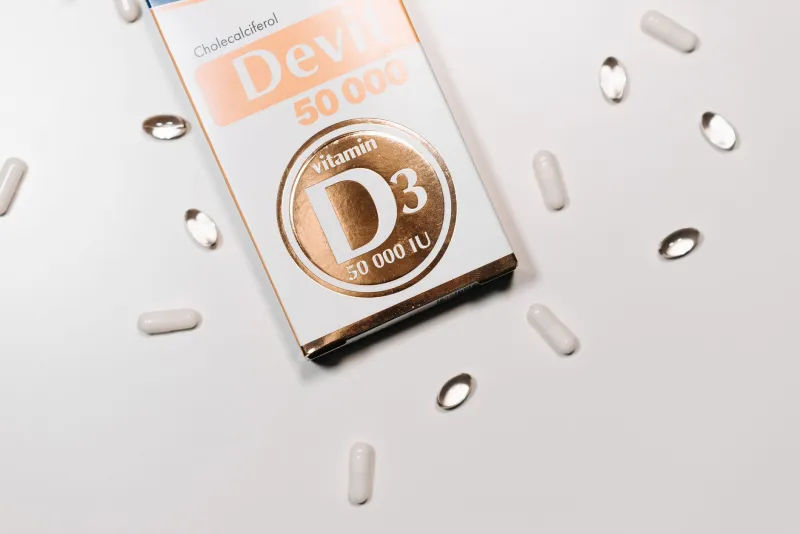
Vitamin D with K2 requires closer serum monitoring during perimenopause. The commonly recommended daily dose of 1,000–2,000 IU may prove inadequate to maintain target serum levels of 40–60 ng/mL as hepatic conversion efficiency shifts. Periodic 25-hydroxyvitamin D testing—rather than fixed dosing—becomes a more defensible approach.
B-complex formulations with methylated cofactors (methylfolate, methylcobalamin) are particularly relevant for women whose methylation capacity is further stressed by hormonal transition and the increased oxidative load of perimenopause. Standard cyanocobalamin-based formulas may prove less effective in women who were previously adequate methylators.
Calcium absorption from food and supplements declines as estrogen falls and intestinal transport efficiency decreases. The longstanding recommendation to split calcium doses across the day—no more than 500 mg per serving—becomes more important, not less, as absorption competes with reduced carrier protein availability.
Omega-3 fatty acids take on additional importance as estrogen's anti-inflammatory influence diminishes. The systemic inflammatory shift of perimenopause increases the demand for EPA and DHA in quantities that dietary intake alone rarely meets for most American women.
Timing as a Therapeutic Variable
Beyond which supplements to take, when they are taken becomes a more consequential variable during perimenopause than in earlier decades. Cortisol patterns, which are frequently dysregulated during hormonal transition, interact with nutrient metabolism in ways that make morning versus evening dosing a clinically meaningful distinction for several compounds.
Magnesium taken in the evening aligns with the body's natural relaxation and cellular repair window. Vitamin D taken with the largest fat-containing meal of the day maximizes absorption through fat-soluble transport pathways. B vitamins taken in the morning support daytime methylation demands without the sleep-disrupting stimulatory effects that some women experience with evening dosing.
These are not arbitrary preferences. They represent an attempt to align supplementation with the altered hormonal rhythms of a body in transition—a fundamentally different physiological environment than the one for which most standard supplement protocols were designed.
A Framework for Midlife Recalibration
The women who navigate this transition most successfully in the clinical literature are not those who simply take more of what they were already taking. They are those who approach midlife supplementation as a distinct phase requiring reassessment—ideally supported by updated laboratory testing, a qualified practitioner familiar with perimenopausal physiology, and products formulated with bioavailability, not just ingredient lists, as a primary design criterion.
At Dr. Zoh Wellness, we recognize that the supplement needs of a woman at 45 are not a simple extension of her needs at 35. The hormonal architecture has shifted, the metabolic infrastructure has adapted, and a protocol that once worked with precision may now require meaningful refinement. That refinement is not a concession to aging. It is an application of science to a physiology that has changed—and deserves a response that has changed with it.