The Whole-Food Blind Spot: When Your Healthiest Meals Are Working Against Your Nutritional Goals
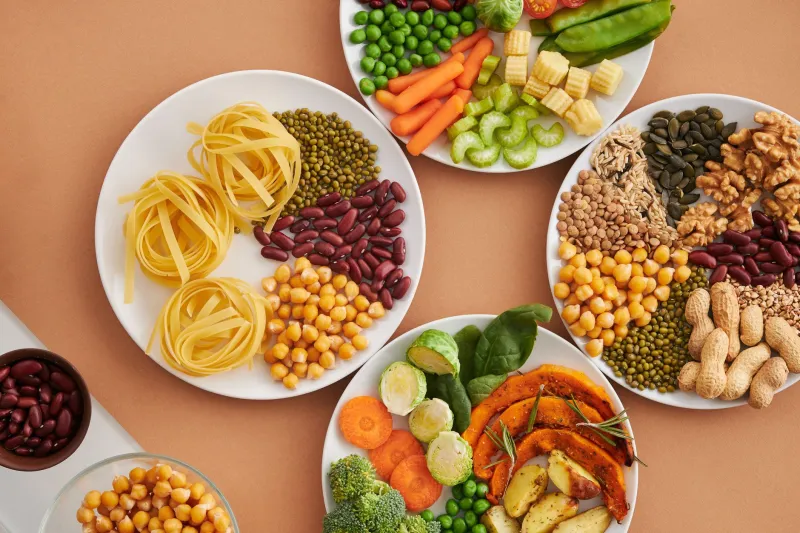
The American dietary advice landscape has spent decades pushing a consistent message: eat more whole foods. More vegetables. More legumes. More nuts and seeds. Fewer processed items. The guidance is broadly sound, and the health outcomes associated with whole-food dietary patterns are well-documented. But within that picture of nutritional virtue, there exists a mechanism that almost no mainstream dietary counseling addresses—one that can leave the most conscientious eaters paradoxically short of the minerals their diets appear to supply in abundance.
That mechanism involves antinutrients: naturally occurring plant compounds that evolved not to nourish you, but to protect the plant. And for individuals who have built their diets around the foods most frequently celebrated by nutritionists and wellness media, the implications are worth examining carefully.
What Antinutrients Are and Why Plants Make Them
Plants cannot flee predators. Over millions of years of evolutionary pressure, they developed chemical defenses—compounds embedded in seeds, leaves, and roots that make them less digestible, less palatable, or less nutritionally available to the organisms consuming them. These compounds are not contaminants or the result of poor agricultural practice. They are intrinsic features of some of the most nutritionally celebrated foods in the American diet.
The four most clinically significant antinutrient classes are phytates, oxalates, tannins, and lectins. Each operates through a distinct mechanism, affects different minerals, and is present in different concentrations across the food supply.
Phytates: The Mineral Handcuffs in Your Grains and Legumes
Phytic acid—stored in seeds as phytate—is the primary phosphorus reservoir in grains, legumes, nuts, and seeds. In the digestive tract, it behaves as a potent chelating agent, binding to positively charged mineral ions including zinc, iron, calcium, and magnesium and forming insoluble complexes that the intestinal epithelium cannot absorb.
The research on phytate-mineral interference is extensive. Studies have demonstrated that a single high-phytate meal can reduce zinc absorption by 50 percent or more compared to a phytate-free meal containing equivalent zinc content. For populations consuming plant-forward diets—including the rapidly growing number of Americans adopting vegetarian or vegan eating patterns—this represents a structural absorption disadvantage that dietary zinc content alone does not account for.
The irony is that many of the foods most aggressively marketed as zinc sources—hemp seeds, pumpkin seeds, chickpeas, lentils—are simultaneously among the highest-phytate foods in the American diet. The zinc is present. The body's ability to access it is substantially compromised.
Oxalates: The Hidden Variable in Leafy Greens and Superfoods
Oxalic acid occurs naturally in a wide range of plant foods, with particularly high concentrations in spinach, Swiss chard, beet greens, rhubarb, almonds, and—notably for current dietary trends—raw cacao and certain varieties of dark chocolate. In the gut, oxalate binds calcium with high affinity, forming calcium oxalate crystals that are excreted rather than absorbed.
Spinach is perhaps the most instructive example. It contains a respectable quantity of calcium on paper—approximately 245 milligrams per cooked cup. However, its oxalate content is so high that calcium bioavailability from spinach is estimated at roughly 5 percent—compared to approximately 30 percent from dairy sources. A person relying on spinach as a primary calcium source while avoiding dairy is not receiving the calcium their meal tracking app suggests they are.
Oxalates also bind iron, though with less clinical impact than their effect on calcium. For individuals prone to kidney stones—a condition affecting approximately 11 percent of American men and 6 percent of women—high oxalate intake carries additional concerns beyond mineral absorption.
Tannins: The Polyphenol Problem in Tea, Coffee, and Legumes
Tannins are polyphenolic compounds found in tea, coffee, red wine, certain legumes, and many fruits. They are frequently discussed in positive terms—as antioxidants, as contributors to cardiovascular health—and that framing is not entirely incorrect. However, tannins also bind non-heme iron (the form found in plant foods and supplements) and significantly impair its intestinal uptake.
Consuming tea or coffee with or immediately after an iron-rich meal can reduce non-heme iron absorption by 50 to 70 percent, according to controlled studies. For women of reproductive age—who already carry a higher baseline risk of iron deficiency due to menstrual losses—this is a clinically meaningful interaction. A woman eating lentils for their iron content while drinking green tea with her meal may be absorbing a fraction of the iron she believes she is consuming.
Which Americans Are Most Vulnerable
Not everyone is equally affected by antinutrient-mediated mineral depletion. Several populations face compounded risk:
Plant-forward and vegan eaters rely disproportionately on the highest-antinutrient food categories for their mineral intake, while simultaneously lacking the heme iron from animal sources that absorbs independently of phytate interference.
Women of reproductive age face elevated iron and zinc requirements at baseline, making any absorptive inefficiency more consequential.
Individuals with gut permeability issues or inflammatory bowel conditions may have compromised mineral uptake even from low-antinutrient sources, making the additional burden of antinutrient exposure more significant.
Those consuming high quantities of raw, unprocessed plant foods—a pattern promoted heavily in raw food and clean eating communities—receive the highest antinutrient load, since cooking and food processing both reduce antinutrient concentrations substantially.
Evidence-Based Strategies to Preserve Bioavailability
The solution is not to abandon whole-food eating. The antinutrient problem is real but manageable with deliberate preparation strategies that are well-supported in the nutrition science literature.
Soaking and sprouting legumes, grains, and seeds activates phytase—an enzyme that degrades phytate—reducing phytate content by 30 to 70 percent depending on duration and conditions. Traditional food preparation practices across cultures incorporated these methods long before their biochemical rationale was understood.
Cooking reduces oxalate content meaningfully. Boiling spinach and discarding the cooking water removes a substantial portion of soluble oxalates. Steaming is less effective; boiling is the preferred method for high-oxalate vegetables.
Separating tannin-containing beverages from iron-rich meals by at least one hour preserves non-heme iron absorption. Vitamin C consumed alongside plant-based iron sources actively enhances absorption by reducing ferric iron to the more absorbable ferrous form—partially counteracting tannin and phytate interference.
Pairing high-oxalate foods with calcium-rich foods in the same meal may actually reduce oxalate absorption into the bloodstream by binding it in the gut rather than the kidney—a strategy relevant to kidney stone prevention as much as mineral optimization.
Fermentation is among the most effective antinutrient-reduction strategies available. Sourdough bread, prepared through traditional long fermentation, contains dramatically lower phytate levels than commercially yeasted bread made from the same flour. Fermented soy products such as tempeh and miso retain far less phytic acid than whole soybeans.
The Bigger Picture
Nutritional science at its most sophisticated does not ask simply what a food contains—it asks what the body can actually extract from it under real digestive conditions. The gap between theoretical nutrient content and physiological bioavailability is where many health-conscious Americans unknowingly lose ground.
At Dr. Zoh Wellness, we hold the position that dietary excellence and supplemental support are not competing philosophies—they are complementary strategies. When the food supply itself contains built-in absorptive barriers, targeted supplementation of zinc, iron, calcium, and magnesium in bioavailable forms becomes not a redundancy but a rational safeguard. Eating well is the foundation. Understanding what your body actually receives from that effort is where genuine nutritional intelligence begins.