January's Most Expensive Myth: What Your Body Actually Does With That Detox Kit
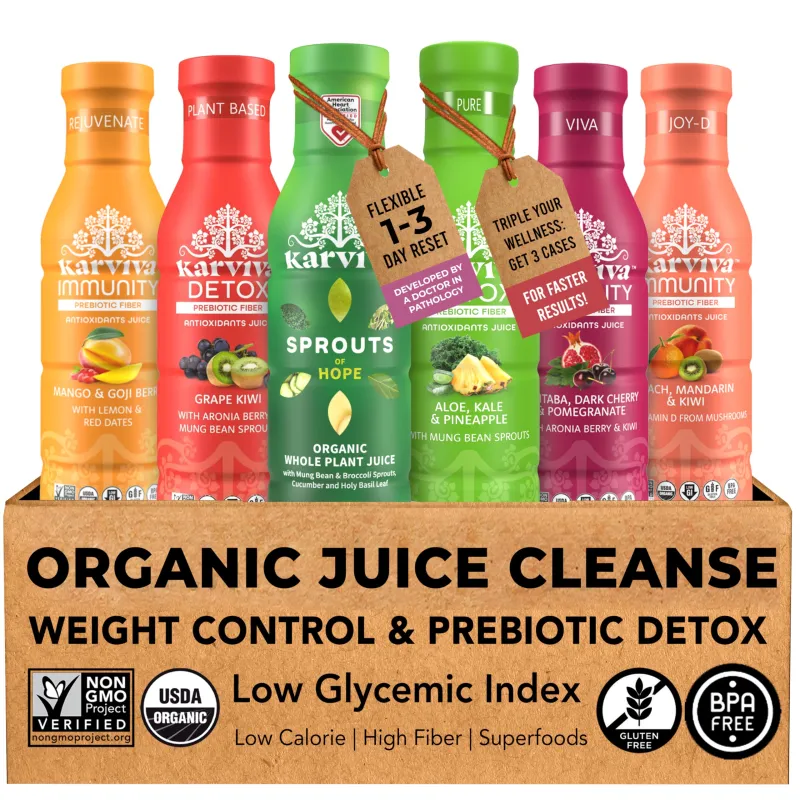
Photo: detox tea bottles and juice cleanse products on pharmacy shelf, via groceryeshop.us
Walk into any American pharmacy on January 2nd and you'll find it: an entire endcap devoted to detox. Teas promising to 'reset' your system, capsules labeled 'liver support,' juice programs that promise to scrub your colon clean. The average shopper walking away with a two-week cleanse kit spends somewhere between $60 and $250, and industry analysts estimate the domestic detox market now exceeds $50 billion annually when juices, supplements, and program fees are combined.
The question worth asking isn't whether these products sell. It's what, physiologically speaking, they actually accomplish.
What 'Detox' Means in a Lab Versus on a Label
In clinical medicine, detoxification refers to specific, measurable processes: the biotransformation of fat-soluble compounds in the liver via phase I and phase II enzymatic pathways, filtration by the kidneys, and elimination through bile and urine. These systems run continuously, whether or not you drink celery juice.
Most commercial detox products sidestep this science entirely. Toxicologists who have reviewed popular cleanse formulations consistently note that the active ingredients fall into a short list: laxatives such as senna, diuretics like dandelion extract, and fiber blends. None of these accelerate hepatic detoxification. What they do is increase the frequency of bathroom visits and reduce water weight—changes that feel dramatic but reverse within days of stopping the regimen.
The weight lost on a juice cleanse is largely glycogen-bound water. When normal eating resumes, the body restocks its glycogen and the scale climbs back. This isn't a failure of willpower; it's basic biochemistry.
The Colon Cleanse Question
Colon cleansing deserves particular scrutiny. Practitioners of colonic irrigation claim accumulated waste lingers on intestinal walls for years, but gastroenterologists have found no evidence of this so-called 'mucoid plaque.' The intestinal lining sheds itself completely every few days through a tightly regulated renewal process. You are, quite literally, self-cleaning.
What colonics can do is introduce risk: electrolyte imbalances, perforation in rare cases, and disruption of the gut microbiome—the very bacterial ecosystem that digestive health researchers now consider central to immune function and nutrient absorption. For a population already spending heavily on probiotics to support gut flora, deliberately flushing that flora seems contradictory.
Does the Liver Need 'Support'?
The one kernel of legitimate science in the detox aisle concerns milk thistle and its active compound, silymarin. Some studies suggest modest hepatoprotective effects, though the evidence base is thin and inconsistent. More importantly, if your liver genuinely needs pharmaceutical-grade support—because of fatty liver disease, medication burden, or alcohol use—that's a conversation for a physician, not a capsule selected off a display rack.
A Better Kind of Reset
For those who genuinely want to feel better after a season of excess, the evidence points toward less expensive interventions:
- Fiber from actual food. Aim for 25 to 38 grams daily from legumes, whole grains, and vegetables. Fiber binds bile acids and supports regular elimination far more effectively than any tea.
- Hydration, plainly. Adequate water intake supports renal filtration without the diuretic theatrics.
- Alcohol reduction. The single most evidence-supported 'liver cleanse' is simply drinking less.
- Fermented foods. Yogurt, kimchi, and sauerkraut support microbiome diversity without the laxative side effects.
- Sleep and movement. Both influence metabolic health more measurably than any cleanse kit.
None of this sells as well as a thirty-day program with a before-and-after photo. But unlike the $200 shelf, it actually works—and the results don't disappear when the regimen ends.