The Cortisol Window: Why the Clock on Your Wall May Matter More Than the Label on Your Supplement Bottle
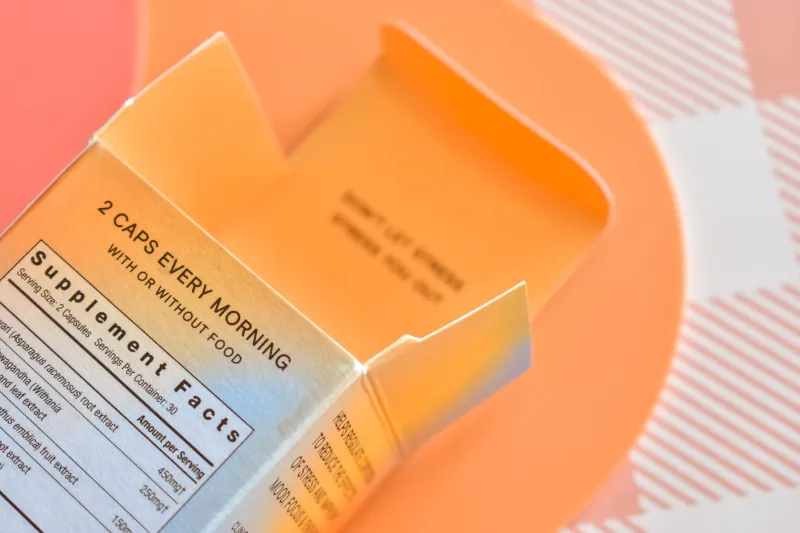
Most people evaluate their supplements by what is inside the bottle. Potency. Bioavailability. Third-party testing. These are legitimate considerations, and at Dr. Zoh Wellness, we take them seriously. But there is a variable that receives almost no attention on product labels and very little discussion in mainstream wellness content: the hormonal environment inside your body at the moment you swallow that capsule.
Cortisol, the adrenal glucocorticoid most commonly associated with stress, operates on a strict circadian schedule. Its daily rhythm is not incidental—it governs metabolic rate, gut motility, immune activation, mineral transport, and cellular uptake of several key nutrients. Taking the right supplement at the wrong point in this hormonal cycle can meaningfully reduce its effectiveness. Understanding the cortisol arc may be the single most underutilized tool in practical nutritional science.
The Architecture of Your Daily Cortisol Curve
In a healthy individual with intact circadian function, cortisol follows a predictable pattern. Levels begin rising approximately two hours before waking, reaching their daily peak within 30 to 45 minutes of getting out of bed—a phenomenon researchers call the cortisol awakening response (CAR). From that morning peak, cortisol declines steadily throughout the day, reaching its nadir in the late evening hours before sleep.
This curve is not merely a stress marker. It is a master timing signal. It coordinates the activation of anti-inflammatory pathways, regulates blood sugar, modulates immune cell trafficking, and determines the permeability and functional state of intestinal epithelial tissue. In short, it shapes the absorptive landscape that your supplements encounter.
How Peak Cortisol Affects Nutrient Dynamics
The morning cortisol surge is catabolic by nature. It mobilizes stored glucose, increases protein breakdown, and elevates circulating free fatty acids to fuel the demands of waking activity. This metabolic state has direct implications for certain nutrients.
Magnesium and the cortisol-excretion link. Cortisol promotes renal magnesium wasting. During peak cortisol hours, the kidneys excrete magnesium at a higher rate than at other times of day. Taking magnesium first thing in the morning—as many Americans do, simply because it is convenient—means the supplement is being administered precisely when the body is least inclined to retain it. Clinical observations suggest that evening magnesium supplementation, taken when cortisol is low and renal retention is favorable, produces meaningfully better tissue accumulation over time.
Zinc and inflammatory competition. Zinc is transported through mechanisms that are sensitive to inflammatory cytokine activity. The morning cortisol peak is accompanied by a transient pro-inflammatory shift that can interfere with zinc transporter expression in intestinal cells. Some research suggests that zinc absorption is more efficient when taken later in the day, away from peak cortisol-driven inflammatory signaling.
Fat-soluble vitamins and the cortisol-lipid relationship. Vitamins D, K2, A, and E require dietary fat for absorption and are packaged into chylomicrons for lymphatic transport. Cortisol's morning influence on lipid metabolism—specifically its promotion of lipolysis—may alter the lipid environment in ways that affect chylomicron formation and fat-soluble nutrient delivery. Taking fat-soluble supplements with a fat-containing meal later in the morning or at midday, after the acute cortisol peak has subsided, appears to be a more pharmacokinetically rational approach.
When Low Cortisol Creates Its Own Challenges
The evening cortisol nadir, while favorable for magnesium retention and parasympathetic nutrient absorption, is not an optimal window for every supplement. Stimulatory compounds—B vitamins, particularly B6 and B12, as well as adaptogenic herbs like rhodiola and ginseng—can interfere with sleep architecture when taken in the evening. This is not because they are harmful at night, but because they interact with neurotransmitter systems that cortisol would normally be suppressing at that hour.
B vitamins, specifically, are involved in the synthesis of dopamine and norepinephrine—catecholamines that promote alertness. Administering them during the cortisol nadir, when the body is preparing for sleep-related restoration, can produce a mismatch between neurochemical signaling and the intended circadian state. Morning administration of B-complex supplements, despite the cortisol peak, remains appropriate because the alertness-promoting effects align with the body's intended daytime function.
Dysregulated Cortisol and the Amplified Problem
For a significant portion of the American population, the textbook cortisol curve is not the reality. Chronic workplace stress, irregular sleep schedules, shift work, excessive caffeine dependence, and unmanaged anxiety can flatten, invert, or blunt the cortisol awakening response. Individuals with HPA axis dysregulation—sometimes colloquially called adrenal fatigue, though the clinical picture is more nuanced—may experience elevated evening cortisol, blunted morning peaks, or an erratic curve that follows no predictable pattern.
In these individuals, timing recommendations derived from the healthy circadian model may not apply cleanly. Elevated evening cortisol will impair magnesium retention regardless of when supplementation occurs. Blunted morning cortisol may reduce the benefit of timing B vitamins to the peak. For this population, addressing the underlying HPA dysregulation—through sleep hygiene, stress reduction, and appropriate adaptogenic support—is a prerequisite to optimizing supplement timing.
A Practical Timing Framework
Based on the current understanding of cortisol-nutrient interaction, the following general framework reflects the available evidence:
- Morning (with breakfast, post-cortisol peak): B-complex vitamins, vitamin C, iron (on an empty stomach or with light food), adaptogenic herbs intended for daytime energy support.
- Midday (with a fat-containing meal): Fat-soluble vitamins D, K2, A, and E; omega-3 fatty acids; CoQ10.
- Evening (2–3 hours before sleep): Magnesium glycinate or malate, zinc, calcium (if supplementing), and calming botanicals such as ashwagandha or L-theanine.
This is not a rigid prescription—individual variation in cortisol timing, meal schedules, and specific health conditions will modify the optimal approach. However, as a foundational framework, it represents a meaningful upgrade over the common practice of taking all supplements together at an arbitrary time of day.
The Broader Principle
The body is not a static vessel waiting to receive nutrients on demand. It is a dynamic, hormonally orchestrated system that processes inputs differently depending on the time of day, the metabolic state, and the hormonal environment present at the moment of administration. Cortisol is one of the most powerful regulators of that environment.
At Dr. Zoh Wellness, we approach supplementation as a science, not a habit. The question is never only what you are taking—it is when your biology is prepared to use it.